
Think about this: Healthcare professionals want serious games for education. Students love playing them. So why aren’t we seeing more in medical education? The answer is not about technology – but storytelling. Most healthcare educators cannot write compelling game stories. That’s understandable – we are trained in evidence-based practice, not narrative design. But what if AI can bridge this gap?
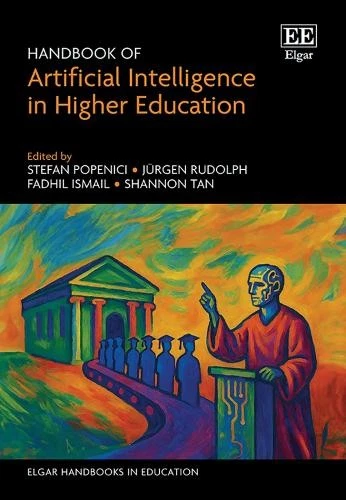
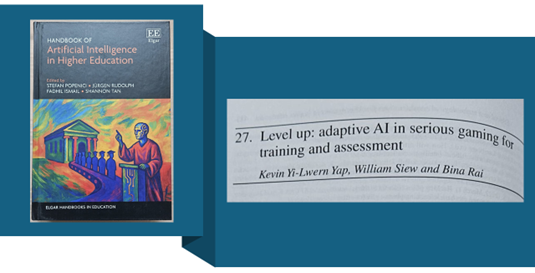
Our new chapter in the Handbook of Artificial Intelligence in Higher Education1 explores how educators can create engaging serious games through AI-powered design.
The Game Design Paradox: Why the Best “Serious” Games Don’t Feel Serious
Think about the last time you or your children were engaged in a game. Remember being so engrossed in a book or Netflix series that you couldn’t stop because you had to know what happened next? What kept you engaged?
What if healthcare training had this same immersion: doctors managing clinical complications, nurses coordinating care transitions, pharmacists checking medication safety – all learning from mistakes without harming real patients? Here’s the challenge: younger Gen Z and Alpha learners are generally healthy and may have never experienced chronic illness or complex clinical care themselves. How then, can they “put themselves in their patients’ shoes”?
This is where narrative immersivity comes in. Through “cognitive authenticity”,2 serious games bridge this empathy gap by creating learning environments where fantasy merges with reality. Players don’t just read about patient experiences, but they “live” them in immersive, yet consequence-free environments that feel real enough to matter.
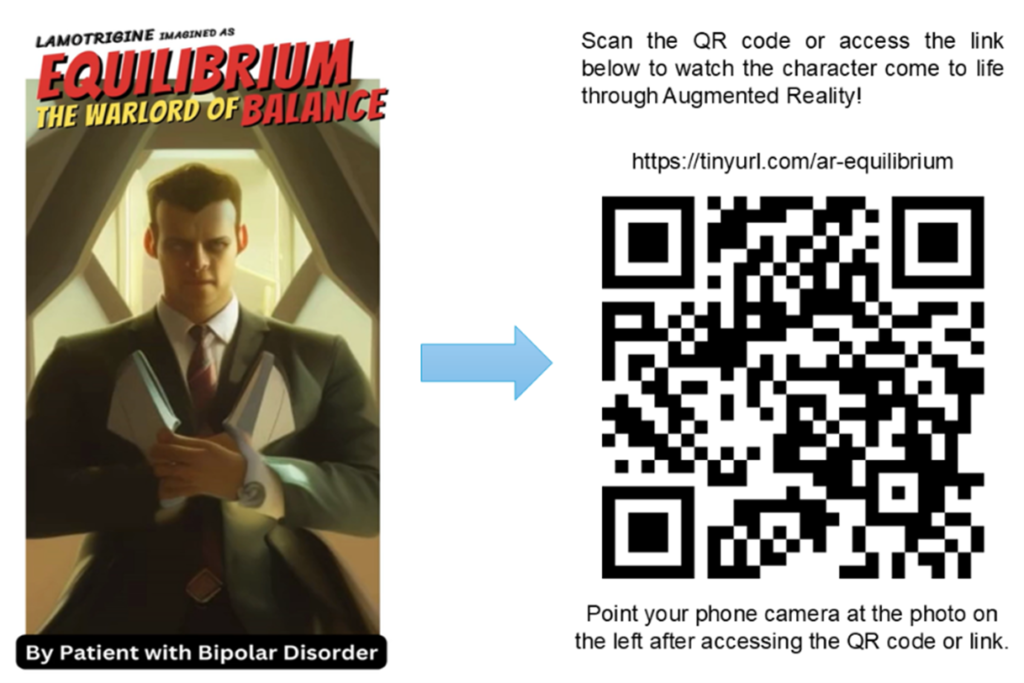
Our chapter talks about two case studies where non-designers – patients and students – created engaging serious games: a superhero character based on a real patient’s medication journey and biomedical engineering students creating their own “choose-your-own-adventure” health games. The key is having the right frameworks and AI-powered tools to transform clinical knowledge into engaging narratives.3,4
Why This Matters for Healthcare Education
Healthcare education is changing. The next generations want interactive and immersive learning. What competencies do your learners need – complex clinical decision-making, empathic responding for difficult patient conversations, interprofessional collaboration? Can serious games help reach your objectives?
You bring the clinical expertise, but Generative AI can scaffold it into engaging game stories. This chapter provides the frameworks and real-world examples to get started. What’s stopping our creativity if the technology and pedagogy already exist?
Resource:
Yap KY-L, Siew W, Rai B. Level up: Adaptive AI in serious gaming for training and assessment. In: Popenici S, Rudolph J, Ismail F, Tan S, eds. Handbook of Artificial Intelligence in Higher Education. Cheltenham, Gloucestershire, UK: Edward Elgar Publishing Ltd; 2025:416-441. https://doi.org/10.4337/9781035338764.00036
References:
- Yap KY-L, Siew W, Rai B. Level up: Adaptive AI in serious gaming for training and assessment. In: Popenici S, Rudolph J, Ismail F, Tan S, eds. Handbook of Artificial Intelligence in Higher Education. Cheltenham, Gloucestershire, UK: Edward Elgar Publishing Ltd; 2025:416-441. https://doi.org/10.4337/9781035338764.00036[↩]
- Yap KY-L, Yap KZ. Training of 21st century skills through “cognitive authenticity” – Enter the Retrozfect multi-VRse. Presented at: Council of Academic Public Health Institutions Australasia (CAPHIA) Australian Public Health Teaching and Learning Forum, Australian National University, Canberra, Australia; 2019. https://dx.doi.org/10.13140/RG.2.2.11784.37122[↩]
- Yap KY-L, Fo K, Wong J. Hallucination as pedagogy – Transforming generative AI’s ‘flaw’ to ‘feature’ for empathy skills training in cancer supportive care. Support Care Cancer 2025; 33(Suppl 1): 583, S72-73. https://doi.org/10.1007/s00520-025-09559-7[↩]
- Yap K, Fo K, Wong J. Teaching the unteachable: Purposeful AI hallucination as a pedagogical framework for 21st century skill development. EDULEARN25 Proceedings; 30 June-2 July, 2025; pp. 5699, Palma, Spain. https://library.iated.org/view/YAP2025TEA[↩]