
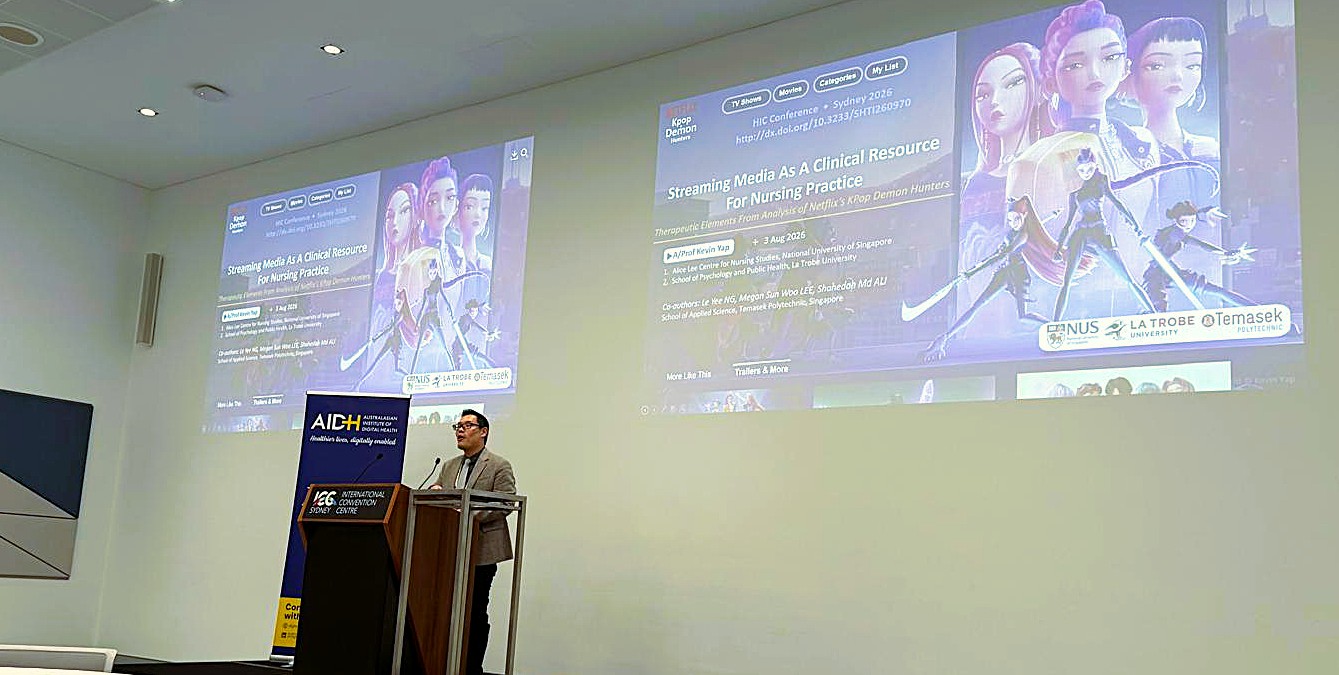
I always leave Health Innovation Community (HIC) Conference a little differently than I arrive. This year’s theme struck a chord with me as I saw the 1.5 decades worth of digital health evolution flash before my very eyes – since I got into the domain of digital health (then only known as eHealth, as the pioneer batch of academics who set up the Institute of Digital Healthcare at the University of Warwick). I’m glad that people are starting to think from “whether” digital health can be done – to “how” it can be done. If the 2012-me was told that AI would be so advanced and we’d be debating how to “UNlearn” machine learning, I’m not sure if I’d have believed. But yet here we are.
This year’s HIC/NMiDH wasn’t as dynamic as when I first attended. But rightly so… It was more about digital health plumbing – talks about the unglamorous, but needed work of wiring, governance, and trust that determines whether the all exciting AI can be made safer for person-centered care (Ya, you got it right – we are no longer on patient-centered care, but moving to person-centered care…)
So rather than writing a session-by-session diary, this year, I got myself a Plaud.AI device to transcribe and summarize the various sessions together and here’s the summary of what I learnt.
This content is only available to subscribers. Please register an account or login for access.
Where KEMA Takes the Stage: Helping Patients Fight Their Demons
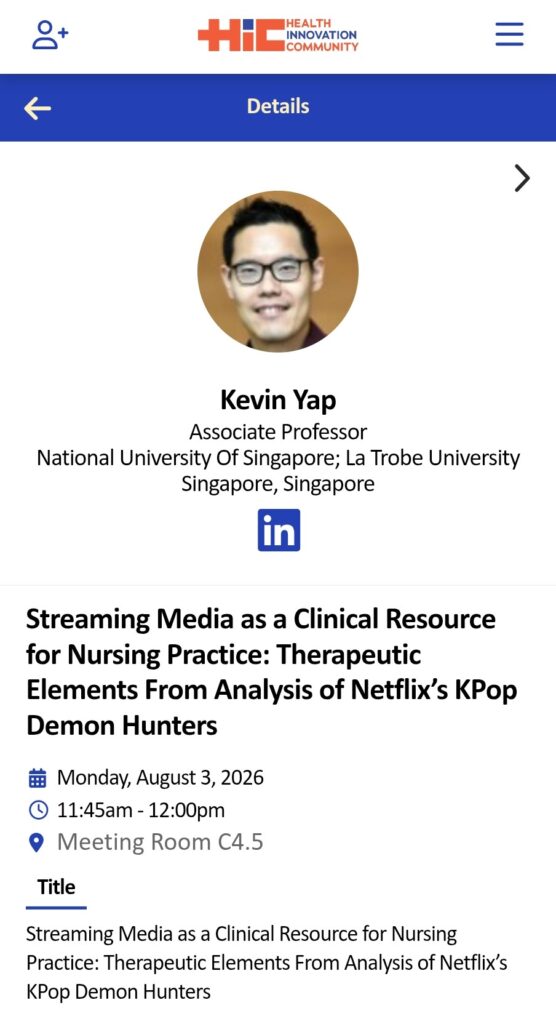
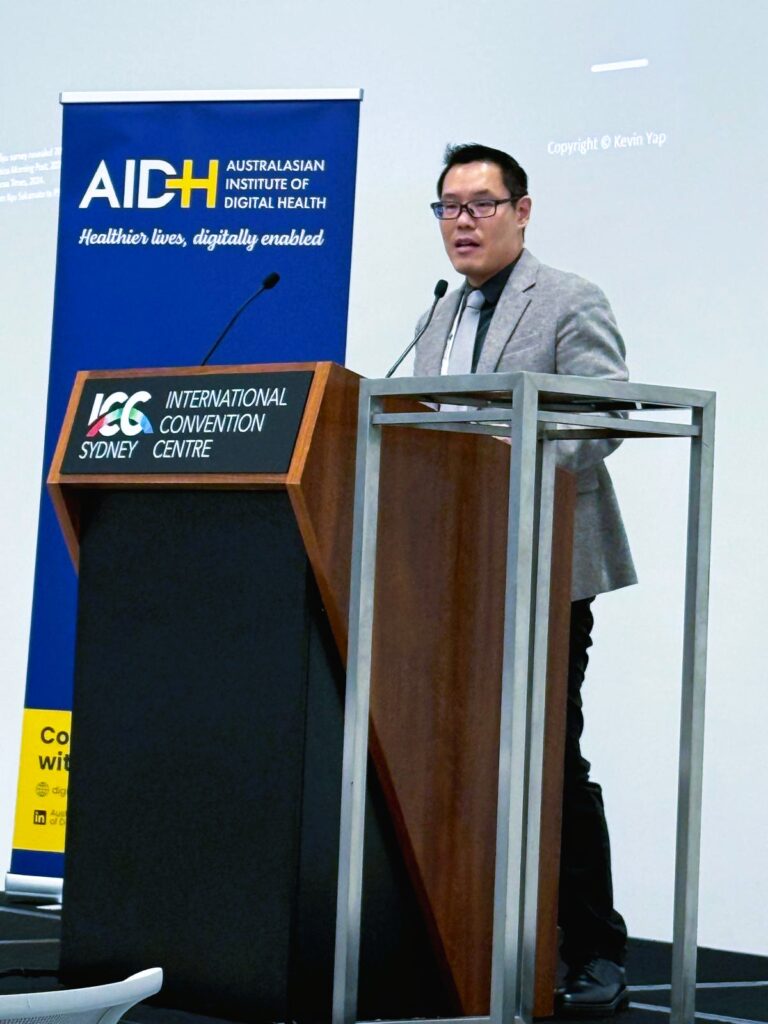
If you’ve followed my work for a while, you will know that I have an interest in the field of digital health humanities. And the most recent work that I have been advocating is the fact that the media that patients already consume can be the clinical material that we are mostly ignoring. The NMiDH track (Track 5) gave me the avenue to showcase this through a clinician-unlikely case study: Netflix’s KPop Demon Hunters.
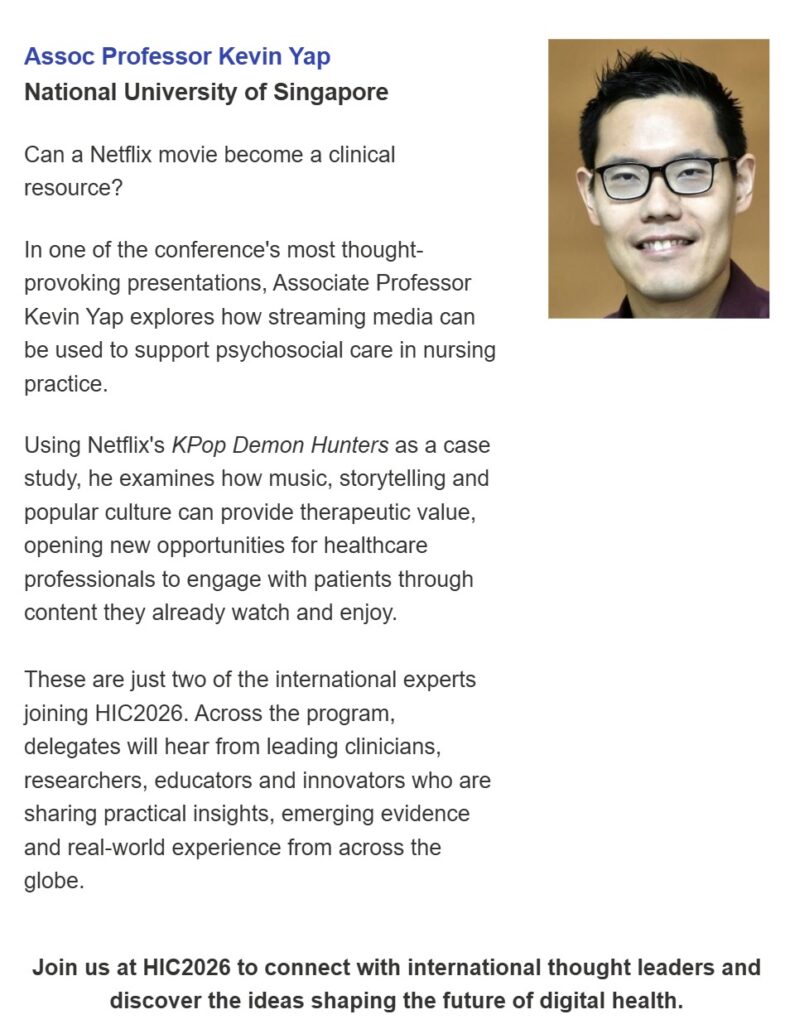
The starting problem is not a small one. Roughly half of newly diagnosed or recurrent cancer patients don’t receive appropriate psychosocial care. And the literature suggests that even when patients do express a psychosocial need out loud, nurses miss or “duck” it almost one-third of the time. Only ~44% of expressed needs get addressed directly. But time pressure and burnout faced by nurses is not helping. There is also a lack of tools for healthcare professionals and nurses to open that conversation and connect with their patients. Meanwhile, streaming media is being watched by almost everyone – patients and healthcare workers alike – doing enormous uncredited emotional labour, and clinicians have no framework for engaging with it.
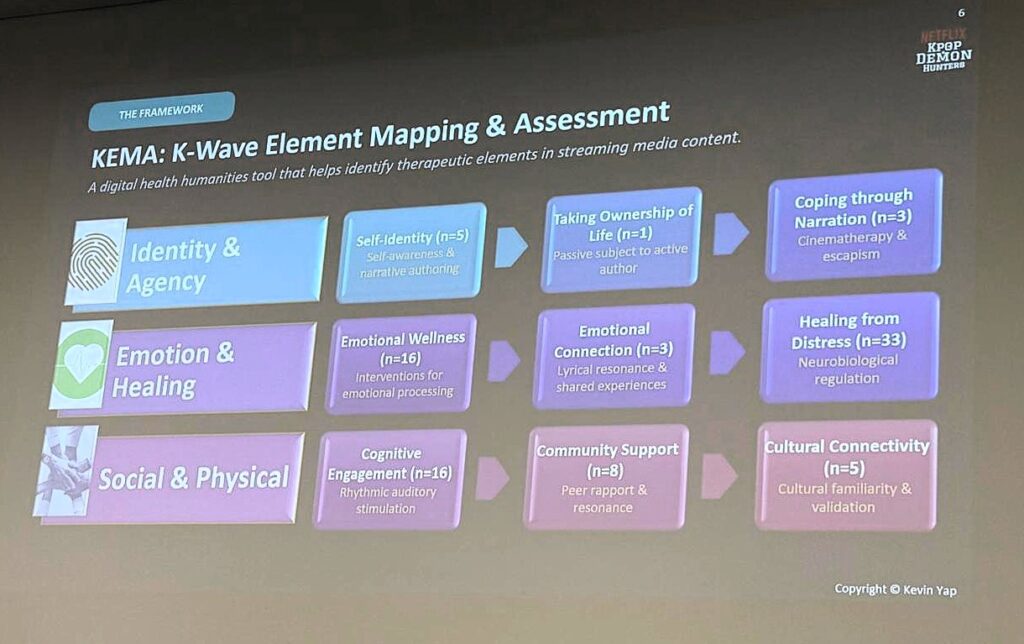
That’s the gap the K-wave Element Mapping and Assessment (KEMA) framework was built to address. KEMA came out of a systematic review of 90 studies on music and narrative therapy, cross-referenced against a deep thematic analysis of KPop Demon Hunters – a movie that, between its self-identity arc, use of music as literal protective armour against evil, and its 500 million global views, turned out to be an unusually rich exemplar case study for psychosocial intervention. Watching the movie an average of 6 times each, we tore apart the plot and storyline, character arcs, and even the musical elements and lyrical content of the 7 song in the soundtrack.
What came out were 9 therapeutic themes organised into 3 main categories:
- Identity and Agency — self-identity, ownership of one’s life, coping through narration
- Emotion and Healing — emotional wellness, emotional connection, healing from distress
- Social and Physical — cognitive engagement, community support, cultural connectivity
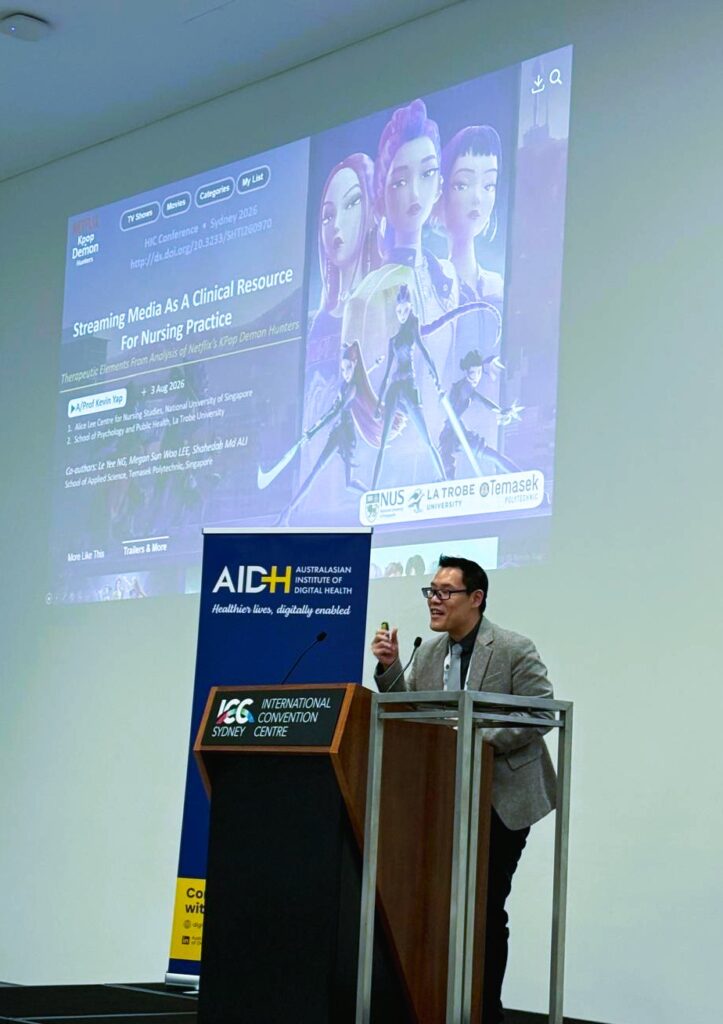
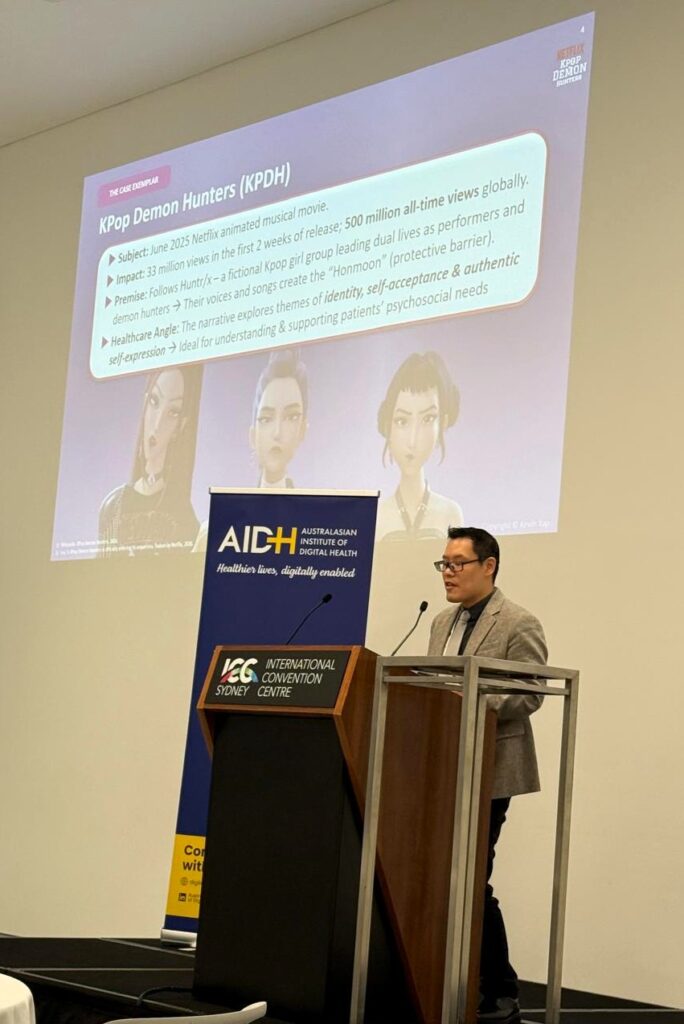
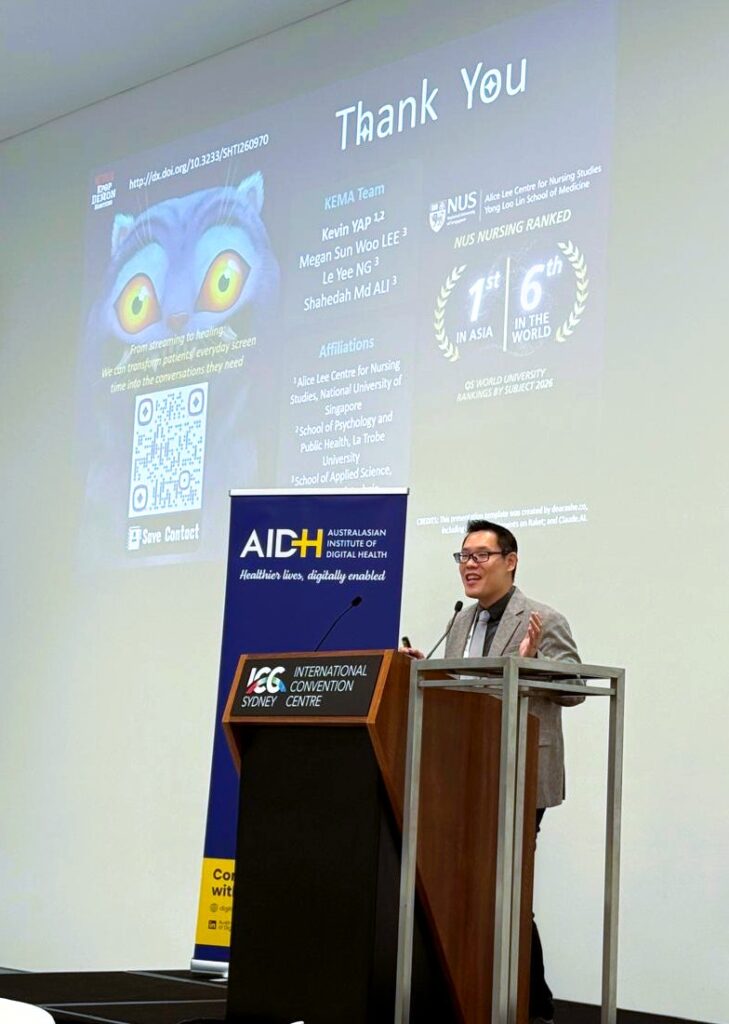
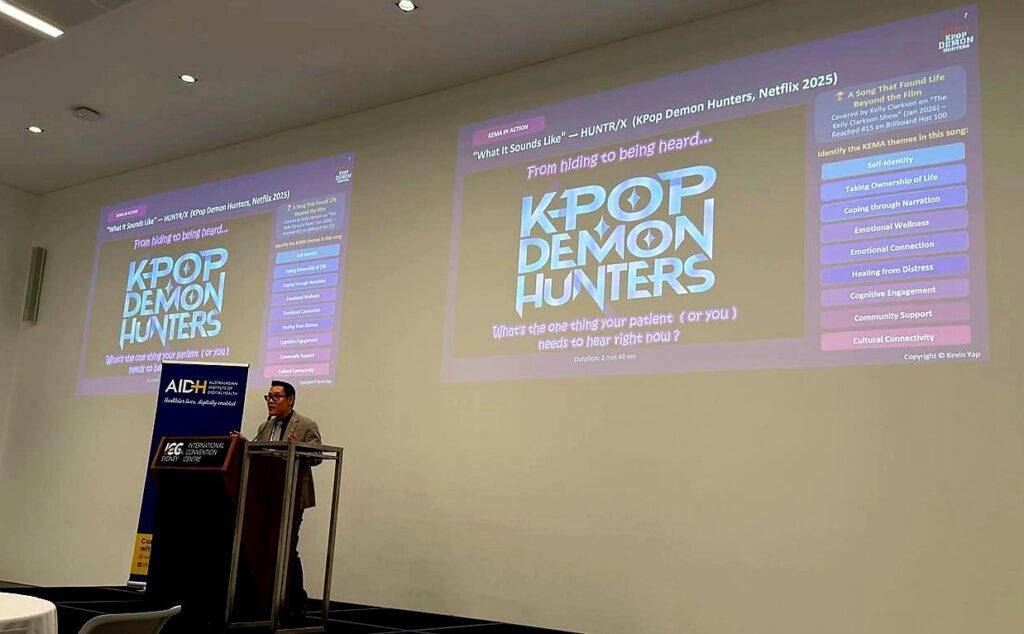
The pitch to the HIC/NMiDH audience was deliberately practical, not just conceptual. For educators, KEMA can be put into self-care and wellbeing curricula for nursing students. For practitioners, it’s a way of using the media a patient is already watching as an opening for a psychosocial conversation. For researchers, it’s a framework that can be tested against validated psychosocial outcome tools. KEMA isn’t trying to replace psycho-oncology services or narrative therapy training. It’s trying to give nurses a low-cost, evidence-grounded way to turn “what are you watching?” into connection for a real clinical dialogue.
The Plumbing Era of Digital Health Has Arrived
This year’s HIC had one message running: Australia has largely solved the strategy problem in digital health. Now it’s time for the governance and regulatory sectors to do their parts. Similarly, the clinical cultures who are willing to workaround will be the ones that thrive in this AI-enhanced healthcare landscape. That’ll be the work of the next few years. But I, for one, am glad to argue that the humanities should start playing a critical role right now. And when the digital health world starts picking this up – Remember… You first heard it at HIC 2026 @ ICC Sydney.